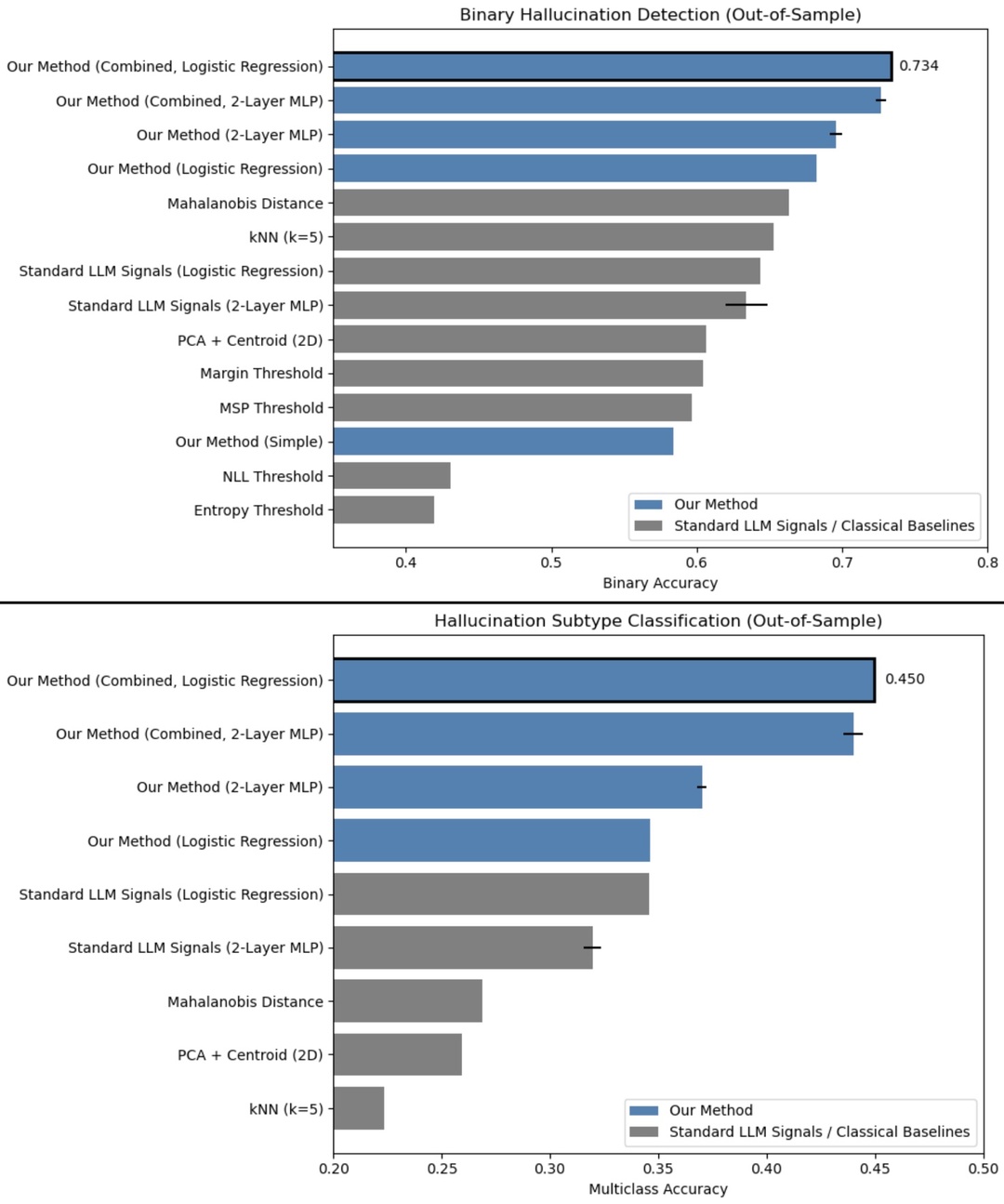
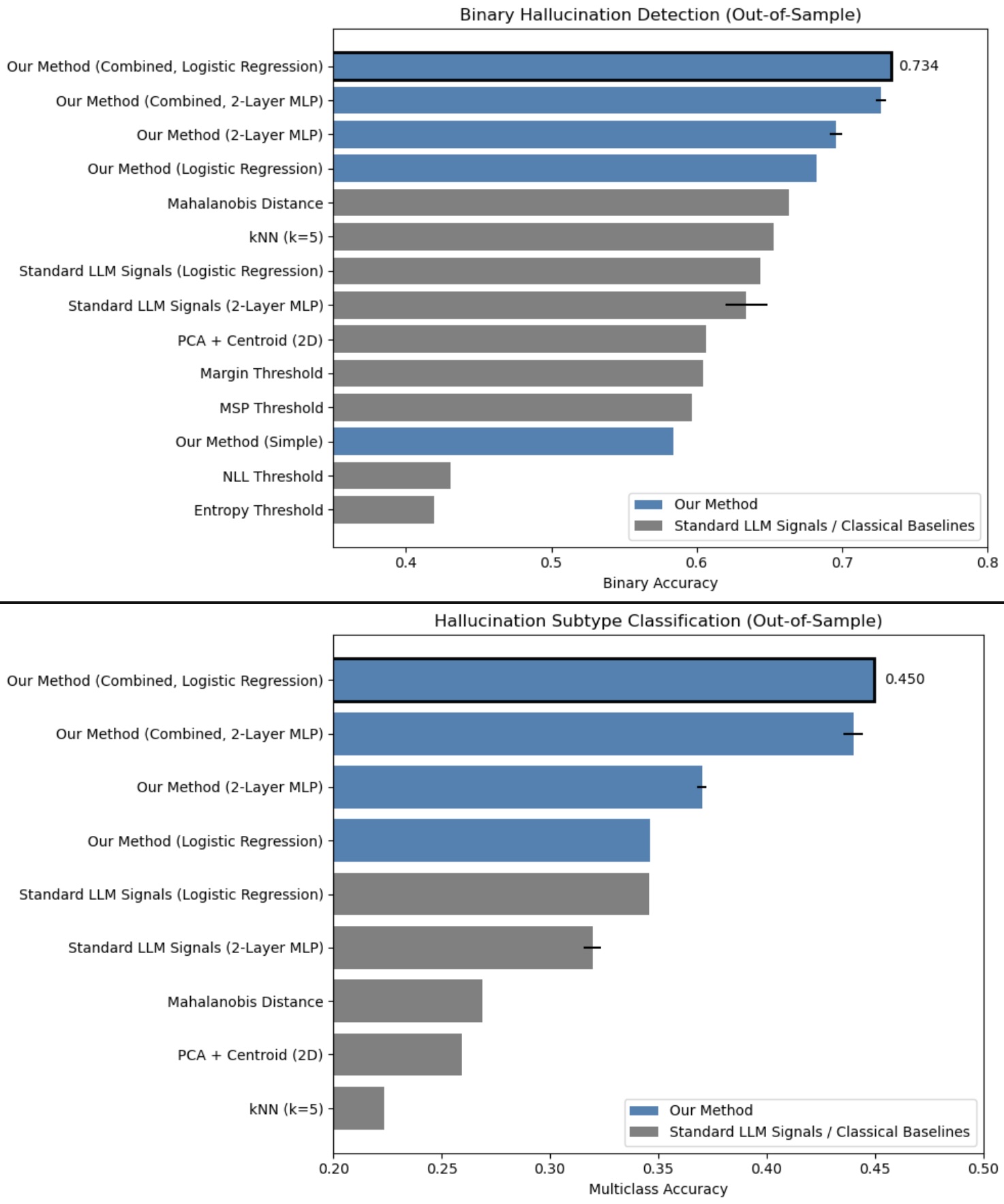
In a strict out-of-sample benchmark, our method improves real-time hallucination detection over standard approaches from ~64% to ~74%, with statistically decisive gains — even using a small, lightly trained model without extensive optimization.
Currently seeking early-stage funding and research partners — open to conversations.